
In July 2025, with facilitation support from the Sasakawa Leprosy (Hansen’s Disease) Initiative, organizations participating in the 3rd Global Forum of People’s Organizations on Leprosy/Hansen’s Disease, held in Bali, Indonesia, established a global level Oversight Committee. The committee’s mandate is to monitor the existence and implementation of national and international policies and to hold governments, donors, pharmaceutical companies, and intergovernmental agencies accountable.
The organizations outlined their idea for the committee in a letter of commitment, where they pledged to create “an oversight committee composed by persons affected by leprosy/Hansen’s disease who represent organizations of persons affected by leprosy/Hansen’s disease from all regions.” The committee’s responsibilities include systematically collecting information about the progress of the implementation of the commitments and recommendations of the Global Forum and reporting to organizations of persons affected by leprosy/Hansen’s disease.
To form the Oversight Committee, participating organizations sorted themselves into three regions (Asia, Africa, and the Americas) and elected two members from each region. Since then, the six committee members have held discussions based on the Global Forum’s three outcome documents, as well as their extensive knowledge about the reality of persons affected by leprosy in their respective countries, to set priorities and generate an action plan for the first year (2025–2026). In the following reflections, they present the impact they expect to have, as well as what they expect from leprosy stakeholders.
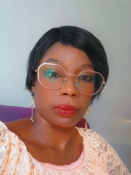
Maguette Ndiaye
Chairperson of the Global Forum’s Oversight Committee
Region: Africa (Senegal)
Organization: ASCL/MTN
The Oversight Committee defends the human rights of persons affected by leprosy (Hansen’s disease) and ensures their dignity, protection against discrimination, and full social, political, and economic participation. As chairperson, I provide leadership to the committee by ensuring transparency and effectiveness. I represent the Oversight Committee at the Global Forum and oversee the annual activity plan, while preserving the committee’s independence and embodying the voices of persons affected by leprosy.
The committee advocates with authorities to defend fundamental rights in areas such as employment, education, housing, freedom of movement, and equality before the law. It also advocates for early diagnosis, free access to quality treatment, and rehabilitation with respect for patients’ informed consent. Its work aims to eliminate discriminatory laws and ensure the active participation of persons affected by leprosy in the development of public policies. The committee adopts a holistic approach integrating medical, social, economic, and legal dimensions. The committee transforms society by enabling persons affected by leprosy to move from victim status to full citizens enjoying their fundamental human rights.
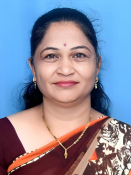
Maya Ranavare
Vice Chairperson of the Global Forum’s Oversight Committee
Region: Asia (India)
Organization: APAL
As a member of the Global Forum’s Oversight Committee, my expectation is that the committee will serve as a strong ethical and moral compass, ensuring that the voices of persons affected by leprosy remain central to all decisions, actions, and global strategies. The committee should actively promote meaningful participation, transparency, and accountability, while safeguarding the dignity, rights, and lived experiences of affected communities.
I hope it will challenge stigma and discrimination by influencing policies, programs, and narratives at national and international levels. The impact I would like to see is a shift from charity-based approaches to a rights-based, community-led movement, where persons affected by leprosy are recognized as leaders, experts, and equal partners. Through constructive oversight, advocacy, and collaboration, the committee can help bridge gaps between institutions and communities, strengthen trust, and ensure that global commitments translate into real, measurable improvements in the lives, inclusion, and well-being of persons affected by leprosy worldwide.
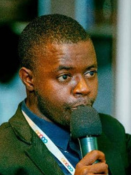
Brima Kpeh
Secretary of the Global Forum’s Oversight Committee
Region: Africa (Sierra Leone)
Organization: NAPAL
As Secretary of the Oversight Committee representing persons affected by leprosy worldwide, my expectation is that the committee will be a credible, principled, and accountable voice for those whose lived experiences should shape global policy and practice. The committee should ensure that the perspectives of persons affected by leprosy are meaningfully integrated into decision-making processes at all levels – global, regional, and national – rather than treated as symbolic participation.
I expect the committee to strengthen transparency, promote rights-based approaches, and advocate for the elimination of stigma and discrimination, in line with global commitments such as those outlined by the World Health Organization and the United Nations. The impact I hope to see is measurable: improved inclusion in policies, increased access to services, strengthened organizations of persons affected, and greater dignity, equity, and social justice for our community worldwide.

Yurani Granada
Deputy Secretary of the Global Forum’s Oversight Committee
Region: the Americas (Colombia)
Organization: FELEHANSEN
One of my main expectations is that all persons affected by Hansen’s disease around the world will become aware of the Oversight Committee’s existence and feel that it is their own space – accessible and representative – where they can raise their voices with confidence and be listened to with empathy, love, and understanding. I aspire for each person to feel supported, empowered, and respected, and for dialogue regarding their human rights to be promoted in a shared language of justice, dignity, and equality.
I also hope that the committee’s impact will transcend borders and gain global recognition from governments and partner organizations, prompting effective responses to the needs and problems of those living with this disease. I trust that we can work together to build a world free of stigma and discrimination, where inclusion, respect, and opportunities for all prevail.
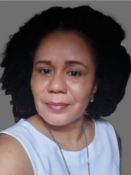
Francilene Mesquita
Communication Manager of the Global Forum’s Oversight Committee
Region: the Americas (Brazil)
Organization: MORHAN
The Oversight Committee of the 3rd Global Forum has been working collectively over the past six months in monthly online meetings to implement its action plan. We began by sharing the three outcome documents from the forum with persons affected by Hansen’s disease and decision-makers. As the communication manager, I would like to emphasize that committee members worked hard to translate summaries of the documents into Portuguese, Spanish, Hindi, Indonesian, and French to make them accessible to the representatives of organizations of persons affected by Hansen’s disease who participated in the 3rd Global Forum.
In addition, we wanted to facilitate the efforts of the organizations to disseminate the summaries widely in their home countries and beyond. Our goal is for all persons affected by Hansen’s disease to be able to read the documents, see their needs reflected in this collective set of rights‑based demands, feel included, and collaborate in monitoring actions where they live, thereby actively and meaningfully participating in community and public life.
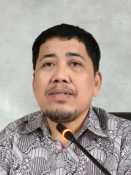
Al Kadri
General Assistant of the Global Forum’s Oversight Committee
Region: Asia (Indonesia)
Organization: PerMaTa
I expect the Oversight Committee to play a strategic and inclusive role in strengthening the voice, capacity, and leadership of communities of persons affected by leprosy. The committee should serve as a bridge between affected communities, governments, technical partners, and donors, ensuring that policies and programs are grounded in lived experience and real needs.
By promoting meaningful participation, transparency, and accountability, the committee can help ensure that persons affected by leprosy are not only beneficiaries but also key decision-makers in initiatives that concern their lives. The impact I hope the committee will have is a tangible improvement in dignity, access to quality health services, social inclusion, and protection of human rights for persons affected by leprosy and their families. Ultimately, the committee should contribute to reducing stigma and discrimination, strengthening community-based organizations, and accelerating progress toward the elimination of leprosy with a person-centered and rights-based approach.




.png)