
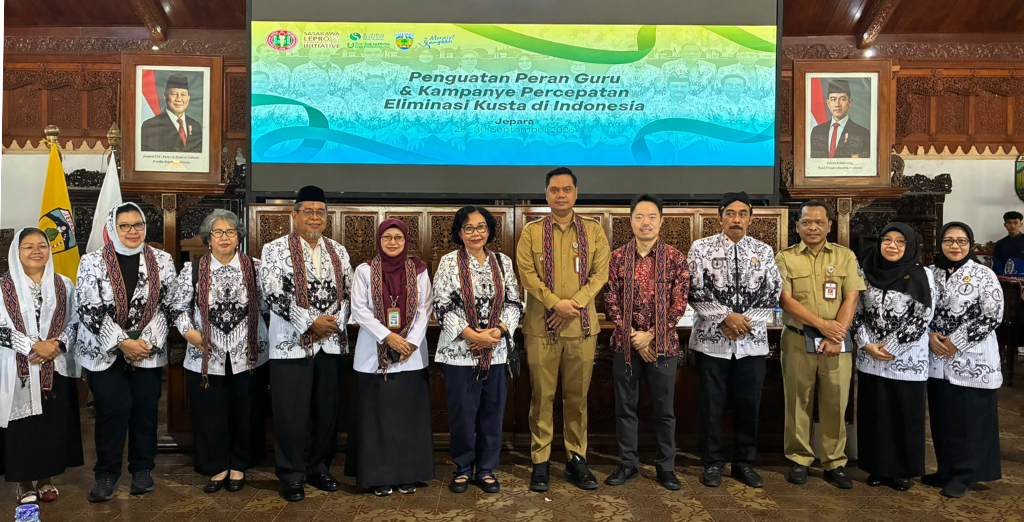
In September 2026, the Sasakawa Leprosy (Hansen’s Disease) Initiative visited Jepara Regency, Central Java, Indonesia, to observe leprosy awareness activities in an educational setting conducted by the Indonesian Teachers Association (Persatuan Guru Republik Indonesia, or PGRI). The activities made use of a toolkit for educators developed by Education International (EI), the voice of teachers and education workers around the world and co-organizer of the Global Appeal 2026 to End Stigma and Discrimination against Persons Affected by Leprosy. In addition to training sessions for faculty and staff, the program also included awareness activities for high school students led by teachers who had completed the training.
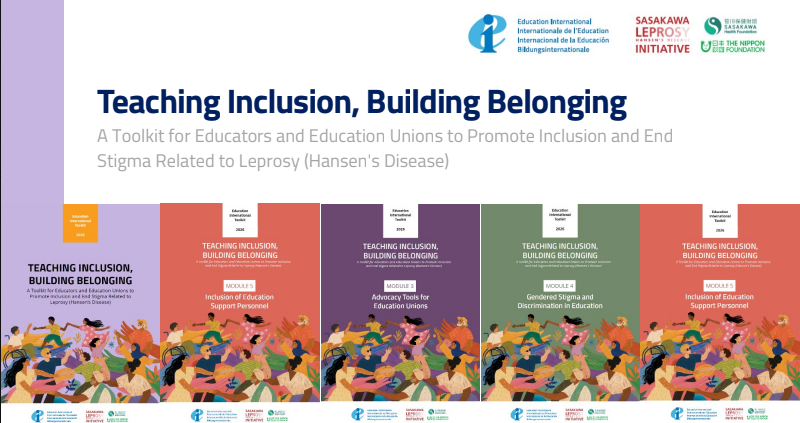
Awareness Toolkit for Educators: “Teaching Inclusion, Building Belonging”
“Teaching Inclusion, Building Belonging” is a practical guide developed by EI to address stigma and discrimination associated with leprosy and promote inclusive education. Created with support from the Sasakawa Health Foundation, it is an initiative prompted by the Global Appeal 2026, which focused on the transformative power of education to replace fear with knowledge and eliminate prejudice. The toolkit, currently only available in English, emphasizes that barriers to education arise not only from leprosy itself but also from the stigma, discrimination, and exclusion associated with it. It aims to create an environment in which every child is treated with dignity, has equal opportunities to learn, and can participate in school and society. Teachers, education support personnel, school administrators, and teachers’ union representatives are the main target audience.
From Teachers to High School Students: Three Days of Training and Awareness-Raising
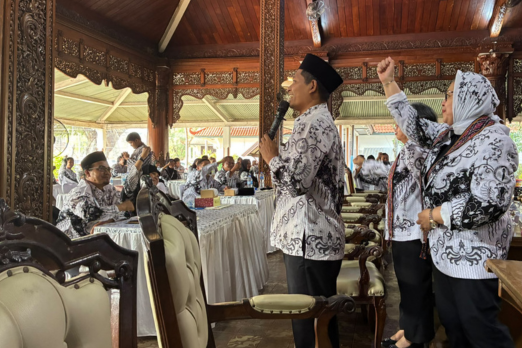
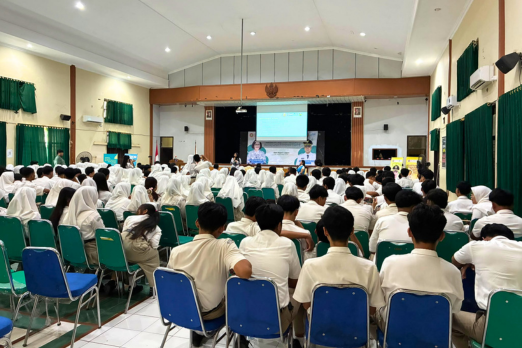
The awareness activities took place over three days, from September 28 to 30. During the first two days, approximately 100 teachers and other education personnel participated in lectures, group work, and other sessions using the toolkit. On the third day, some of the teachers who had undergone the training visited a local high school to conduct awareness activities for approximately 300 high school students.
Two people affected by leprosy participated throughout the three days of activities and both shared their personal experiences and perspectives with participants through panel discussions and question-and-answer sessions. One of them also served as an interpreter for the visiting Sasakawa Leprosy Initiative delegation. The opportunity to hear directly from persons affected by leprosy helped participants gain accurate knowledge about the disease and deepen their understanding of the impact of stigma and discrimination.
Except for the medical lectures, most sessions were led by PGRI members. The lecturers were practicing teachers, some of whom had doctoral degrees in education and related fields. They demonstrated a thorough understanding of the toolkit and effectively incorporated its content into their lectures, presenting it in a clear and accessible way. During the teacher training sessions, participants listened attentively, took notes, and asked questions. In the group work that followed, they developed concrete action plans for applying what they had learned when they returned to their respective schools.
The activities emphasized the importance of teachers acquiring and sharing accurate knowledge about leprosy with their colleagues and students. It is expected that empowering teachers to lead awareness efforts in their local educational settings will help these efforts go beyond one-off activities and ensure that accurate knowledge continues to spread, starting with schools.
Additionally, the Regent of Jepara delivered a speech during the teacher training, and the head of the regency’s education office attended the high school awareness activities. These activities were covered by the local press, providing an opportunity to generate interest in and support for leprosy awareness efforts at the local government level.
Scaling Up Awareness: From Indonesia to the World
The Sasakawa Leprosy Initiative and EI have continued to work together to promote leprosy awareness through the education sector. The aim is to expand this initiative beyond the pilot activities in Jepara Regency to other parts of Indonesia and, eventually, the entire country. To achieve this, it will be essential to secure the understanding and cooperation not only of local governments but also of the central government, so that the outcomes and lessons learned from this initiative can inform future policies and programs.
Building on this experience in Indonesia, the Sasakawa Leprosy Initiative plans to use opportunities such as upcoming EI conferences to network with delegates and promote leprosy awareness activities in schools in partnership with teachers’ unions in the WHO’s 23 priority countries for leprosy control.
The toolkit is scheduled to be translated into Indonesian, Portuguese, Spanish, French, and Hindi. Through collaboration with EI and other partners, the Sasakawa Leprosy Initiative aims to expand school-based awareness activities from Indonesia to other parts of the world, helping to eliminate stigma and discrimination associated with leprosy and to create inclusive educational environments in which everyone is treated with dignity and respect.
*For more information about the toolkit, please visit the EI website.


