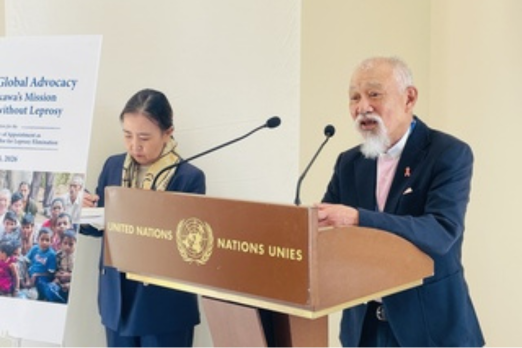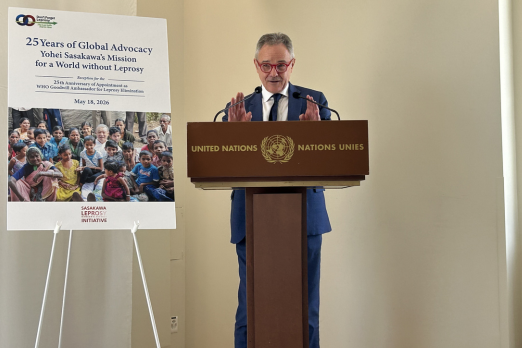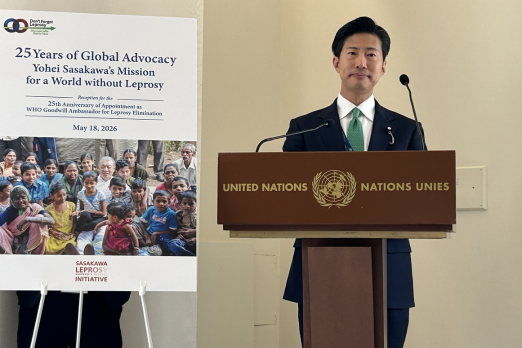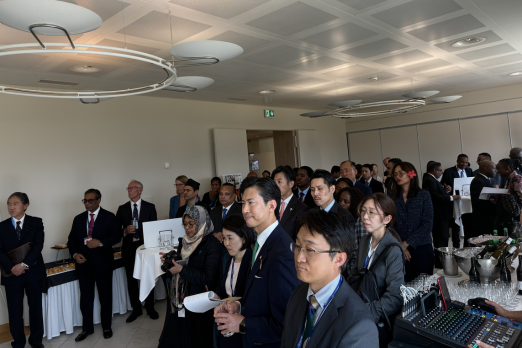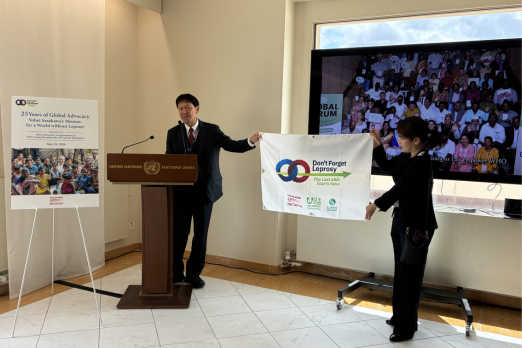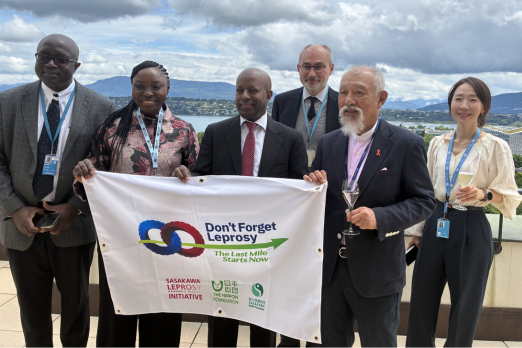

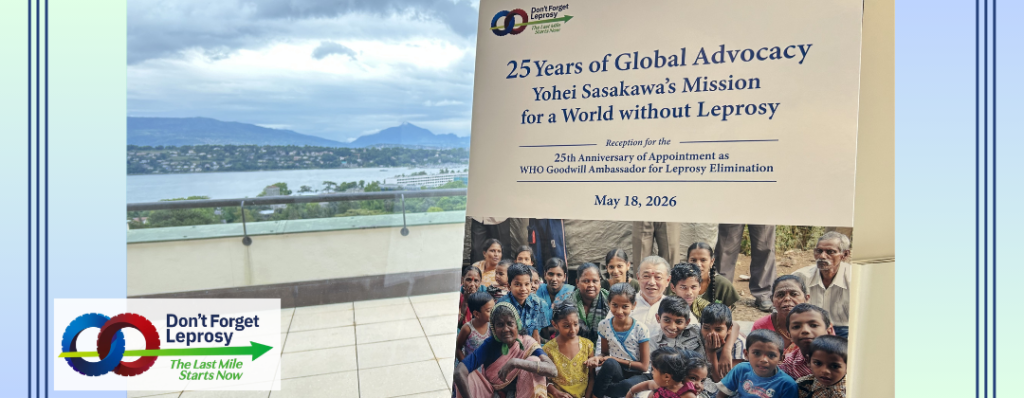
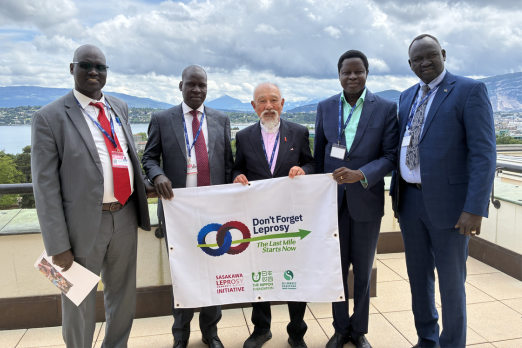
A reception marking the 25th anniversary of Mr. Yohei Sasakawa’s service as a global ambassador for leprosy elimination was held on May 18 at the Palais des Nations during the World Health Assembly in Geneva.
Hosted by the Sasakawa Leprosy (Hansen’s Disease) Initiative, the event brought together approximately 100 participants, including health ministers from leprosy-endemic countries, delegations, WHO officials, representatives of the Government of Japan and International NGOs.
Opening remarks were delivered by Mr. Sasakawa, who reflected on 25 years of advocacy and called for renewed international cooperation toward achieving a world free from leprosy and the discrimination associated with it. Remarks were also delivered by Dr. Jeremy Farrar, Assistant Director-General of WHO. The reception also featured remarks and a toast by Mr. Masayuki Kamiya, Parliamentary Vice-Minister of Health, Labour and Welfare of Japan.
Continued Challenges Despite Global Progress
Despite major progress in reducing the global burden of leprosy, approximately 180,000 new cases continue to be reported each year, demonstrating that transmission remains ongoing. In many countries, persons affected by leprosy still face stigma and discrimination even though the disease is curable. Participants emphasized the importance of maintaining international attention on leprosy and strengthening cooperation, advocacy, and public awareness efforts.
WHO Recognizes Sasakawa’s Leadership
In his remarks, Dr. Farrar recognized Sasakawa’s decades-long commitment and leadership in the global fight against leprosy. Referring to last year’s commemoration of 50 years of partnership between WHO and the Sasakawa Health Foundation, he noted that these milestones reflect “decades of collaboration in the fight against leprosy.”
He praised Mr. Sasakawa’s unwavering dedication, stating that his work has been defined by “persistence, compassion, and a deep commitment to equity and health for all.” Dr. Farrar also stressed the importance of a people-centered approach that goes beyond medical treatment to include prevention, disability care, mental health support, social rehabilitation, and efforts to eliminate stigma and discrimination in society and law.
“Let us use this moment to renew our commitment to zero leprosy — and to the dignity and rights of every person affected,” he said.
25 Years of Global Engagement
Mr. Sasakawa was first appointed Special Ambassador to the Global Alliance for the Elimination of Leprosy in 2001 and later became WHO Goodwill Ambassador for Leprosy Elimination. To date, he has visited 127 countries and spent more than 3,700 days on overseas missions, working closely with governments, health workers, NGOs, and persons affected by leprosy.
“The Last Mile Starts Now”
Speaking at the reception, Mr. Sasakawa thanked all partners who have supported the global movement over the past quarter century. Now 87 years old, he reaffirmed his belief that “problems and solutions are both found in the field” and pledged to continue working “body and soul” until every person affected by leprosy has been reached.
The reception also marked the next phase of the “Don’t Forget Leprosy” campaign launched during the COVID-19 pandemic. Under the new slogan, “The Last Mile Starts Now,” Sasakawa called on the international community to renew its determination and accelerate efforts toward a world without leprosy and the problems it causes.
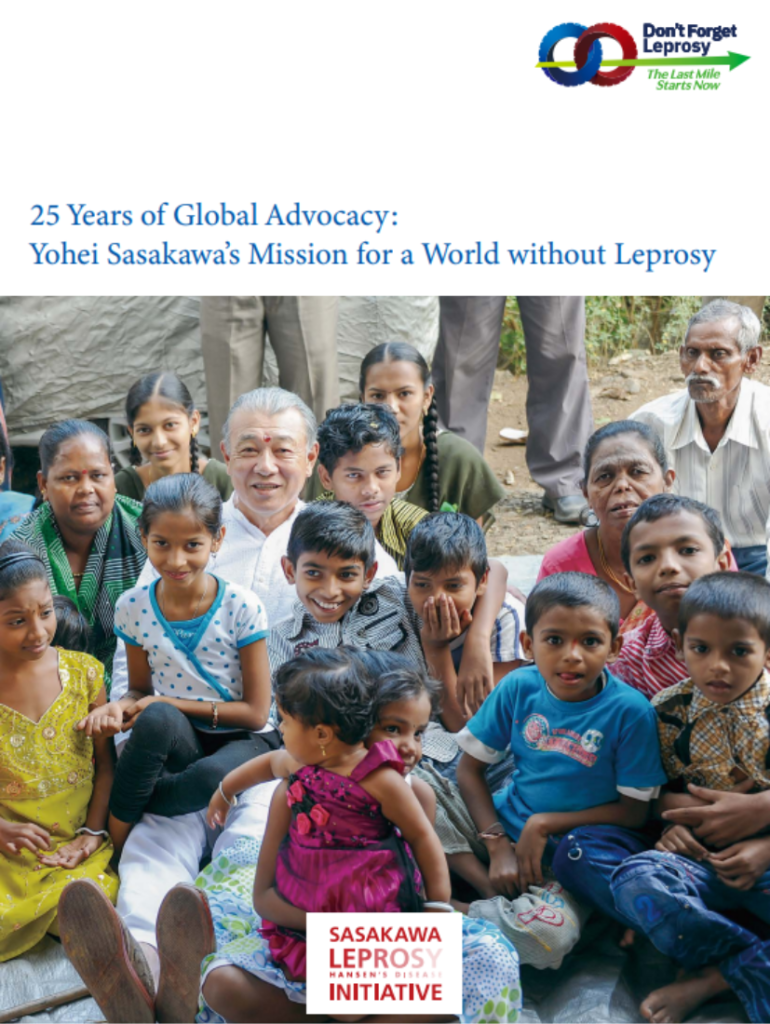
25 Years of Global Advocacy: Yohei Sasakawa’s Mission for a World without Leprosy
Please find the brochure “25 Years of Global Advocacy: Yohei Sasakawa’s Mission for a World without Leprosy” available for download below. It presents an overview of 25 years of global advocacy led by Yohei Sasakawa, highlighting his dedication to a world free from leprosy.