
✍Contributed by Dr. Alice Cruz, Program Advisor on Human Rights Issues, Sasakawa Health Foundation
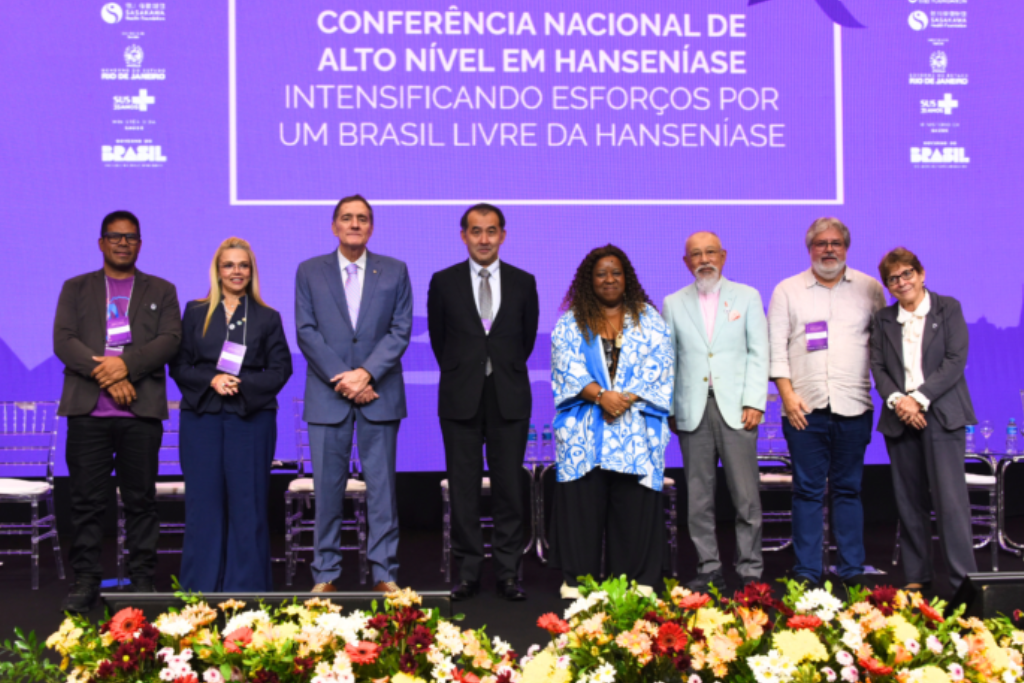
A three-day high-level national conference on the theme of intensifying efforts to rid Brazil of Hansen’s disease took place in Rio de Janeiro, March 12–14, 2026. Co-organized by the Brazilian Ministry of Health and the Sasakawa Leprosy (Hansen’s Disease) Initiative, the conference was the result of an agreement made a year ago at a meeting between President Luiz Inácio Lula da Silva and WHO Goodwill Ambassador for Leprosy Elimination Yohei Sasakawa. The conference gathered nearly 350 participants, including government officials, legislators, public health managers, specialists, clinicians, and persons affected by Hansen’s disease.
Opening speeches from Goodwill Ambassador Sasakawa, Minister of Health Dr. Alexandre Rocha Santos Padilha, Minister of Human Rights and Citizenship Macaé Evaristo, and Director of the Pan American Health Organization (PAHO) Dr. Jarbas Barbosa da Silva Jr. expressed strong commitment towards eliminating Hansen’s disease in Brazil, with deep consensus around the need to intensify efforts. They called for a multisectoral approach, sustained by an unwavering spirit of cooperation and collaboration, that includes the fulfillment of the human rights of persons affected by Hansen’s disease.
The second and third days were dedicated to discussions of challenges and how to speed up the timeline for overcoming them. Topics included concrete measures and responsibilities for implementation; steps for improving access to early diagnosis and treatment at the local level; and consideration of regional differences in endemicity. Persons affected by Hansen’s disease and their organizations led discussions about elimination of discrimination. Information was shared about innovations in prevention, diagnosis, and care as well as capacity-building initiatives for healthcare workers.
To channel the momentum generated by the conference, participants signed a Letter of Rio de Janeiro, which set forth priorities to be adopted by all stakeholders.